Rates up, oil up, Buffett out
A rate hike you'll feel on your card bill, an oil shock you'll feel at the pump, and the end of the Buffett era - plus the coffee chart that explains your grocery receipt.

Rates up, oil past $130, Buffett out after sixty years - and a chart of the coffee habit that quietly doubled on you.
Worth your attention
The Fed raised rates to 3.75-4% and signalled another before year-end - its first hike since 2023. The part that reaches you fastest is credit-card debt: card APRs sit on top of the Fed's rate and reprice within a billing cycle. The average US card already charges about 21%. Variable debt is the first thing a hike makes dearer, so pay it down before the next one lands. (Bloomberg)
Warren Buffett is stepping down after sixty years running Berkshire Hathaway. He took a failing textile mill in 1965 and compounded it at roughly 20% a year, about double the S&P, by buying good businesses and refusing to sell them. Run 20% for sixty years and €1,000 turns into tens of millions - which is the whole trick, and the catch, because almost nobody holds anything that long. (BBC)
Brent crude jumped to about $131 after Saudi Arabia shut a major pipeline and cut October crude to Europe. US diesel has gone from $3.48 to $6.29 a gallon since January, up more than 80%. Diesel is the one to watch, because it moves everything - an oil shock is a tax on every truck, and it reaches your food and goods a few weeks later. (FT)
In Italy, the richest 5% of households now own more than half of all household wealth - and Italian wealth grew just 22% over the last decade, against 60% across the euro area and 87% in Germany (Fondazione Fiba). It's the plainest reminder that an average hides more than it shows: the mean gets pulled up by the top while the median household sits well below it. Watch the median. (ANSA)
Chart of the Week
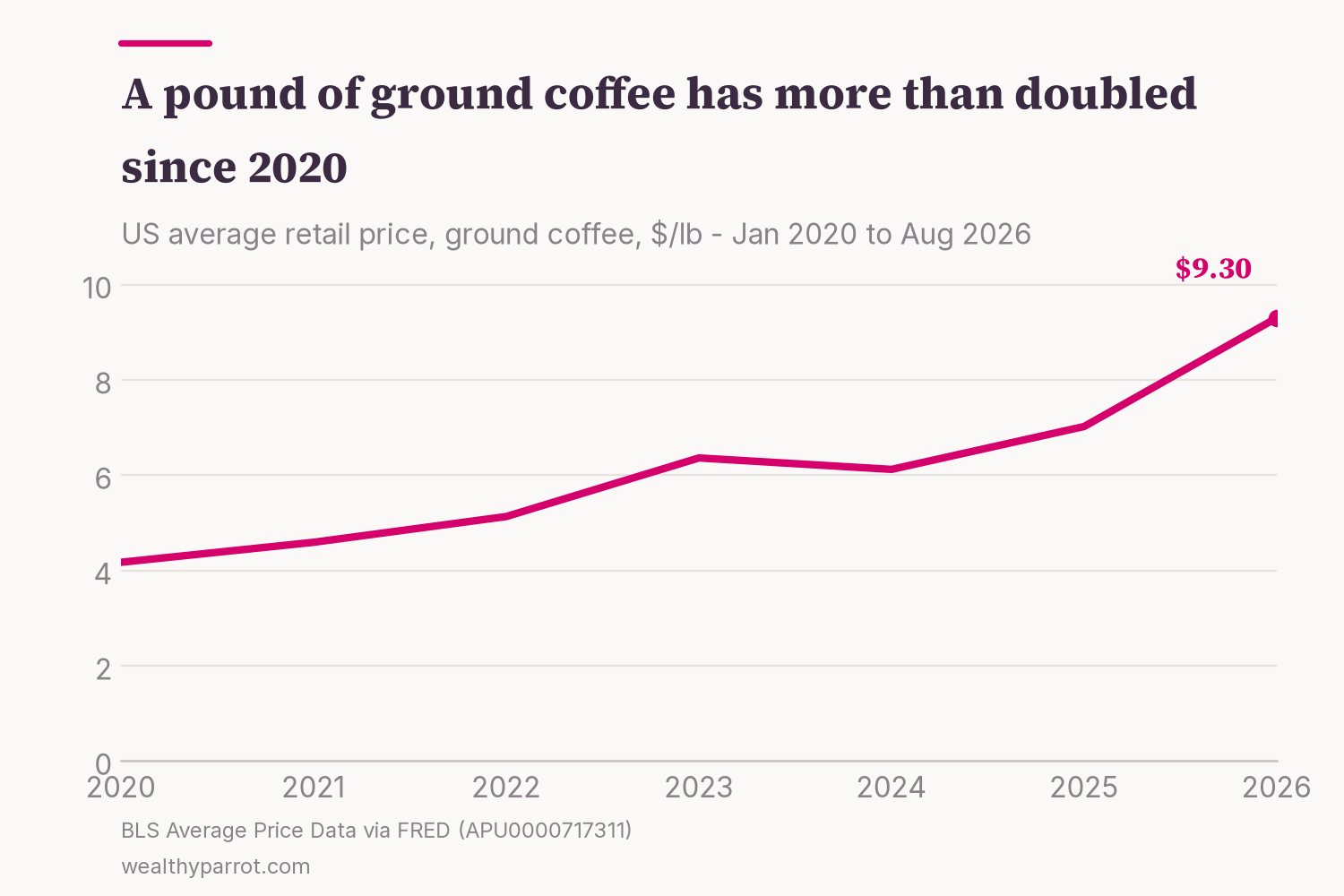
A pound of ground coffee went from $4.17 to $9.30 since 2020, more than double (BLS via FRED). Droughts in Brazil and heat in Vietnam did that, not the barista. At a café, most of your €4 is milk, rent and labour, so cup prices only creep - the raw hit lands hardest on people who brew at home.
🦜 Parrot's take - the cheapest coffee is still the one you make. It just got less cheap.
Second thoughts
The reflex this week was "rates up, that's bad." Bad for whom, though? A rate hike moves money from borrowers to savers; it doesn't burn it. Carry a mortgage or a card balance and yes, it costs you more. Hold cash or short bonds and the same hike pays you more - deposit rates are the highest in years. Most of us sit on both sides at once, a mortgage on one hand and an emergency fund on the other. So the question worth asking is whether you're a net borrower or a net saver right now. Answer that and you know whether this week helped you or cost you. The people who lose cleanly are the ones carrying expensive variable debt with no savings earning the other side. For everyone else it's closer to a wash - worth checking rather than dreading.
One life, one decision
Setup: you're a few years into a career, the budget is tighter than last year, and the game hands you a small money decision.
The January promise
The gym near work has an annual deal. You have said "next month" for eleven months.
- Sign up and actually go (−€600)
- Next month, really
What would you do? Hit reply - I read everything.
It isn't playable yet - this is a preview, pulled straight from the script of a game I'm building. There are no aggregate stats to show you yet, so your reply is the vote: does the €600 commitment ring true, or is "next month" the honest answer? That is a scenario from Wealthy Parrot Life.
One thing
My book on kakeibo, the Japanese budgeting method for people who want to know exactly where the money goes - handy in a year when it goes faster. Kakeibo: Transform Your Finances